Barcelona is not short of ways to unwind: a walk along the seafront, a long lunch, a swim off Bogatell beach. Yet more people who live and work here are adding something much older to their routine: the sauna, followed by cold water. Contrast therapy, as this cycle of heat and cold is often called, draws on Finnish, Turkish, Japanese and Roman bathing traditions.
What contrast therapy actually is
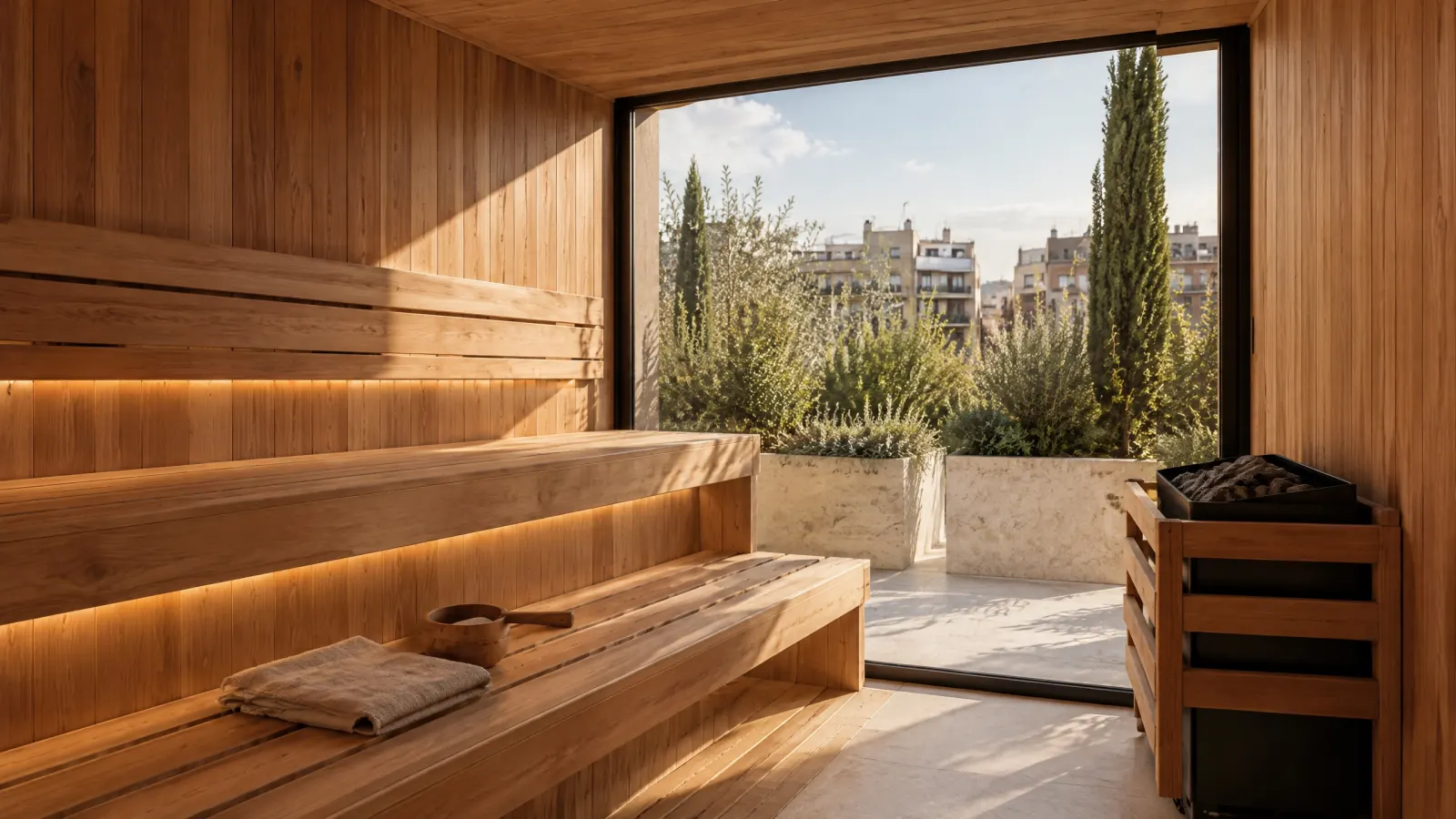
The idea is simple. You spend time somewhere hot, usually a sauna, then cool down quickly in a cold plunge, a cold shower or the sea, and rest before repeating. A traditional Finnish sauna uses dry heat, with bursts of steam from water poured over hot stones, and usually sits somewhere between 70 and 100 degrees. A cold plunge is typically water at around 10 to 15 degrees. Many people describe the feeling afterwards as a mix of calm and alertness.
What it can and cannot do
Research on sauna bathing and cold water immersion is growing, but much of it is small or observational, and results vary from person to person. What can reasonably be said is this:
- Many people find that sauna sessions help them relax and sleep better.
- Cold water may ease the feeling of muscle soreness after hard exercise, at least in the short term.
- Some long-term observational research has linked regular sauna use with heart health, although a link is not the same as proof.
- The ritual itself, with no phone and nothing to do, gives many people a rare stretch of quiet.
What it cannot do matters just as much. A sauna does not detox your body; your liver and kidneys already take care of that. Sweating loses water, not fat, and a cold plunge is not a cure for anything. Some research also suggests that an ice bath straight after strength training may blunt part of the muscle-building response, so if getting stronger is your main goal, keep the cold for other days or wait a few hours.
How to do a session
There is no single correct method, but a gentle and widely used pattern looks like this:
- Shower first and dry off, so you sweat more evenly and keep the sauna clean.
- Sit or lie in the sauna for 8 to 15 minutes, or less if you are new to it.
- Cool down with a cold shower or plunge for anything from 30 seconds to two or three minutes, breathing slowly through your nose.
- Rest for 5 to 10 minutes and drink some water.
- Repeat for two or three rounds.
Listen to your body rather than the clock. Feeling warm, flushed and relaxed is normal; feeling dizzy, sick or light-headed means it is time to step out, cool down gradually and sit. In the cold, the first few seconds are the hardest, and slow, steady breathing helps.
A short safety note
Sauna and cold water are fine for most healthy adults, but both put real demands on the heart and circulation. If you have a heart condition, high or low blood pressure, are pregnant, or take medication that affects your heart rate or blood pressure, speak to your doctor first. Avoid alcohol before and during a session, as it raises the risk of dehydration and fainting. Never fall asleep in the sauna, and stop if anything feels wrong. If you are unsure, ask a doctor.
Fitting recovery into your week
Like most good habits, contrast therapy works best when it is regular and unremarkable. Two or three sessions a week is plenty for most people, and a single round still counts on a busy day. A few ways to make it stick:
- After a workout, keeping the cold short if you have just lifted weights.
- Straight after work, when the heat can help you switch off before dinner.
- Before the working day, when a brief cold dip leaves many people feeling more awake.
- On a rest day, as a slower session with time to sit and talk.
Heat and cold in a Mediterranean climate
It can seem odd to seek out a sauna in a city where summer nights barely cool down. In practice, the Barcelona climate changes how people use heat and cold rather than whether they do. In the humid months from June to September, many lean towards the cold: shorter sauna rounds and longer cool-downs. From roughly November to March, the sauna becomes a welcome way to warm through.
Some people treat a winter dip in the Mediterranean as their cold element. It can be wonderful, but the sea is less predictable than a plunge pool, so go with others, stay close to the shore and take care going straight from intense heat into open water. In the hot months, pay extra attention to hydration.
Making recovery part of everyday life
Part of the appeal of contrast therapy is how little it asks: some heat, some cold and a little time. It is most rewarding close to where you already live, work or train, so that it becomes part of the week rather than an occasional treat. That is the thinking behind Poblenou Club, a members’ club being developed in 22@, where a sauna and cold plunge are planned alongside a gym, workspace and bookable treatments such as massage and physio. Wherever you do it, start gently, keep it regular and let it be a pause rather than a performance.
Questions
How long should you stay in a sauna?
Most people stay in for 8 to 15 minutes per round, and beginners often start with 5 to 10. Leave sooner if you feel dizzy or unwell.
Should you do the sauna or the cold plunge first?
Contrast therapy usually starts with heat and then moves to cold, repeated two or three times. Many people finish on cold to feel alert, or with a rest if they want to wind down.
How cold should a cold plunge be?
Water at roughly 10 to 15 degrees is cold enough for most people. Colder is not necessarily better, especially when you are starting out.
Is it good to use a sauna after the gym?
Many people do, as long as they drink water and cool down sensibly. If building strength or muscle is your main goal, consider keeping cold plunges away from strength sessions.