Poblenou is one of Barcelona’s most rewarding neighbourhoods to live in, and one of the easiest to underestimate. Set on the eastern seafront in the Sant Martí district, it combines old factory chimneys and low-rise streets with glass office buildings, wide beaches and a main promenade that still feels like a village high street. This guide covers its history, daily life, transport and practical tips for living or working here.
From the “Catalan Manchester” to 22@
Poblenou means “new village”, and for much of the nineteenth century that is exactly what it was: a growing settlement within the old municipality of Sant Martí de Provençals, which became part of Barcelona at the end of the century. Cheap land, water and space near the coast drew textile mills, foundries and workshops, and the area became so densely industrial that it was nicknamed the “Catalan Manchester”. Workers’ housing, cooperatives and social clubs grew up around the factories, giving the neighbourhood a strong sense of community that is still noticeable today.
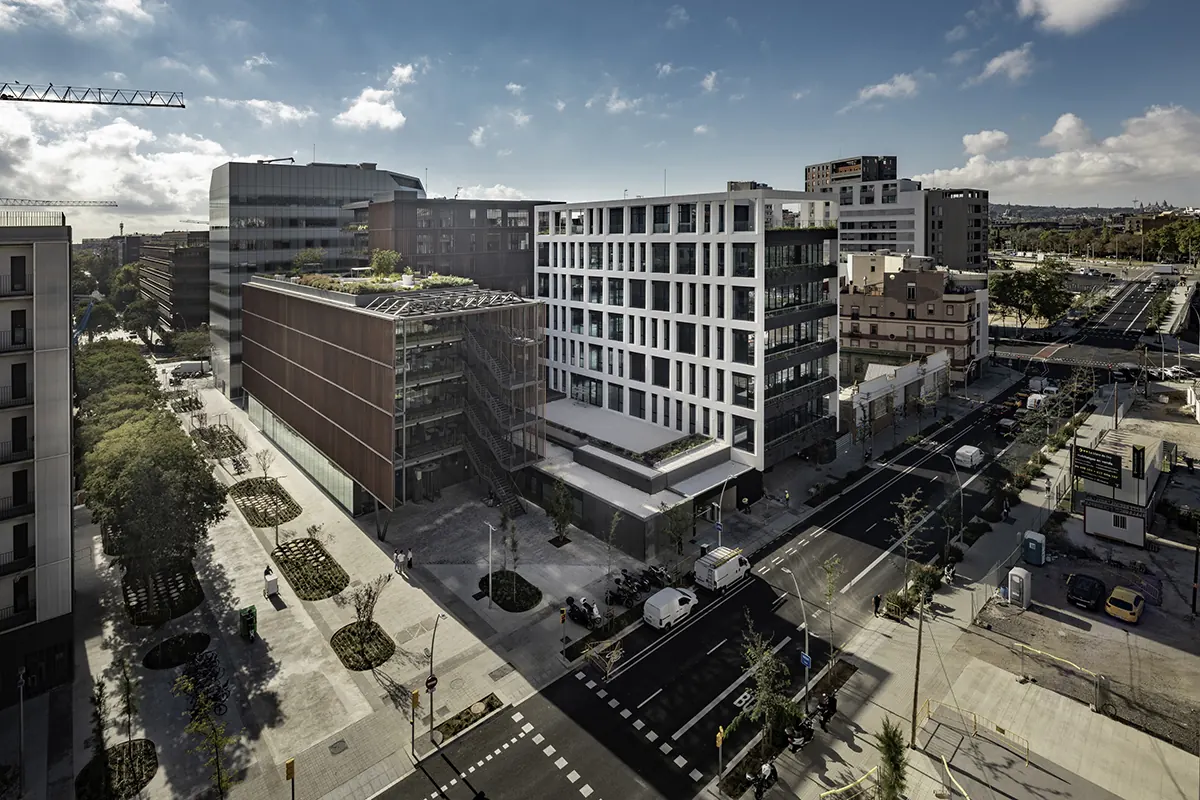
As industry declined in the second half of the twentieth century, many factories closed and large plots were left empty. The 1992 Olympic Games brought the first big change, with the Vila Olímpica built on former industrial land and the seafront opened up to the city. Then, in 2000, the city approved the 22@ plan, a play on 22a, the old planning code for industrial land, to turn the manufacturing zone into a district for technology, design, education and creative work. The transformation is still under way, which is why you can find a converted factory, a new office block and an empty plot on the same street.
Everyday life in Poblenou
For all the change, Poblenou keeps a local, unhurried rhythm. Mornings start with coffee on a terrace, children walk to school past old warehouses, and in the evening people head down to the sea for a stroll or a swim.
Rambla del Poblenou
The heart of the neighbourhood is the Rambla del Poblenou, a tree-lined pedestrian promenade that runs from Avinguda Diagonal down towards the sea. It is lined with cafés, ice-cream parlours, bakeries and long-standing independent shops, and it is where neighbours bump into each other, families gather at weekends and the festa major, the neighbourhood’s annual festival, comes to life.
Beaches and parks
Poblenou has some of the most relaxed beaches in Barcelona. Bogatell and Mar Bella are popular with locals for swimming, running and beach sports, while Nova Mar Bella and Llevant, further along the coast, tend to be quieter. A promenade and cycle path follow the shoreline, so the beach becomes part of everyday life rather than a weekend outing. Inland, the Parc del Centre del Poblenou, designed by the architect Jean Nouvel, offers shade, lawns and play areas.
What to do in Poblenou
Beyond the beach there is plenty to explore, much of it around Plaça de les Glòries, on the north-western edge of the neighbourhood, where three of the city’s great avenues meet.
- Torre Glòries: Jean Nouvel’s rounded tower, formerly known as Torre Agbar, has become one of the most recognisable shapes on the Barcelona skyline.
- Disseny Hub Barcelona: home to the Museu del Disseny, with collections of design, decorative arts and fashion.
- Els Encants: one of Europe’s oldest flea markets, now under a large mirrored canopy next to Glòries, where you can browse furniture, antiques, clothes and everyday odds and ends.
- Can Framis: the Fundació Vila Casas museum of contemporary Catalan painting, housed in a restored former textile factory.
- Converted factories: walk the streets around the Rambla and Carrer de Pere IV and you will see old industrial buildings turned into studios, offices, schools and cultural spaces, often with their brick chimneys still standing.
Getting around
- Metro L4 (yellow line): stops such as Llacuna, Poblenou, Selva de Mar and Bogatell run through the neighbourhood and connect it with the city centre.
- Metro L1 (red line): Glòries station serves the square, Els Encants and the Disseny Hub.
- Tram: the tram along Avinguda Diagonal links Glòries with the Fòrum area and beyond.
- Cycling: bike lanes, the seafront path and Bicing, the city’s shared bike scheme, make cycling one of the most practical ways to get about.
- Walking: the beach, the Rambla and Glòries are all within walking distance of each other, and several streets have been calmed and pedestrianised as part of the city’s superilles, or superblocks.
Who lives and works here
Poblenou is a genuine mix. Families who have lived here for generations share the streets with people who have arrived more recently from other parts of Barcelona, from the rest of Spain and from abroad. The 22@ district has drawn technology companies, start-ups, design studios and media organisations, and Universitat Pompeu Fabra has a campus here, so there is a steady flow of students, researchers and professionals. You will hear Catalan, Spanish and English, often in the same café, and many people both live and work within a few streets of home.
Tips for living or working in Poblenou
- Explore on foot before you choose a street: the atmosphere shifts quickly between the quieter residential blocks, the busier office areas of 22@ and the streets closer to the beach.
- Expect some building work: the transformation is ongoing, so it is worth checking what is planned near a flat or office before you commit.
- Learn a little Catalan: it is widely spoken in the neighbourhood, and even a few words are warmly received.
- Think about where you work: many people here work remotely or flexibly, and having a good place to work outside the flat makes a real difference to daily life.
Work, wellbeing and community
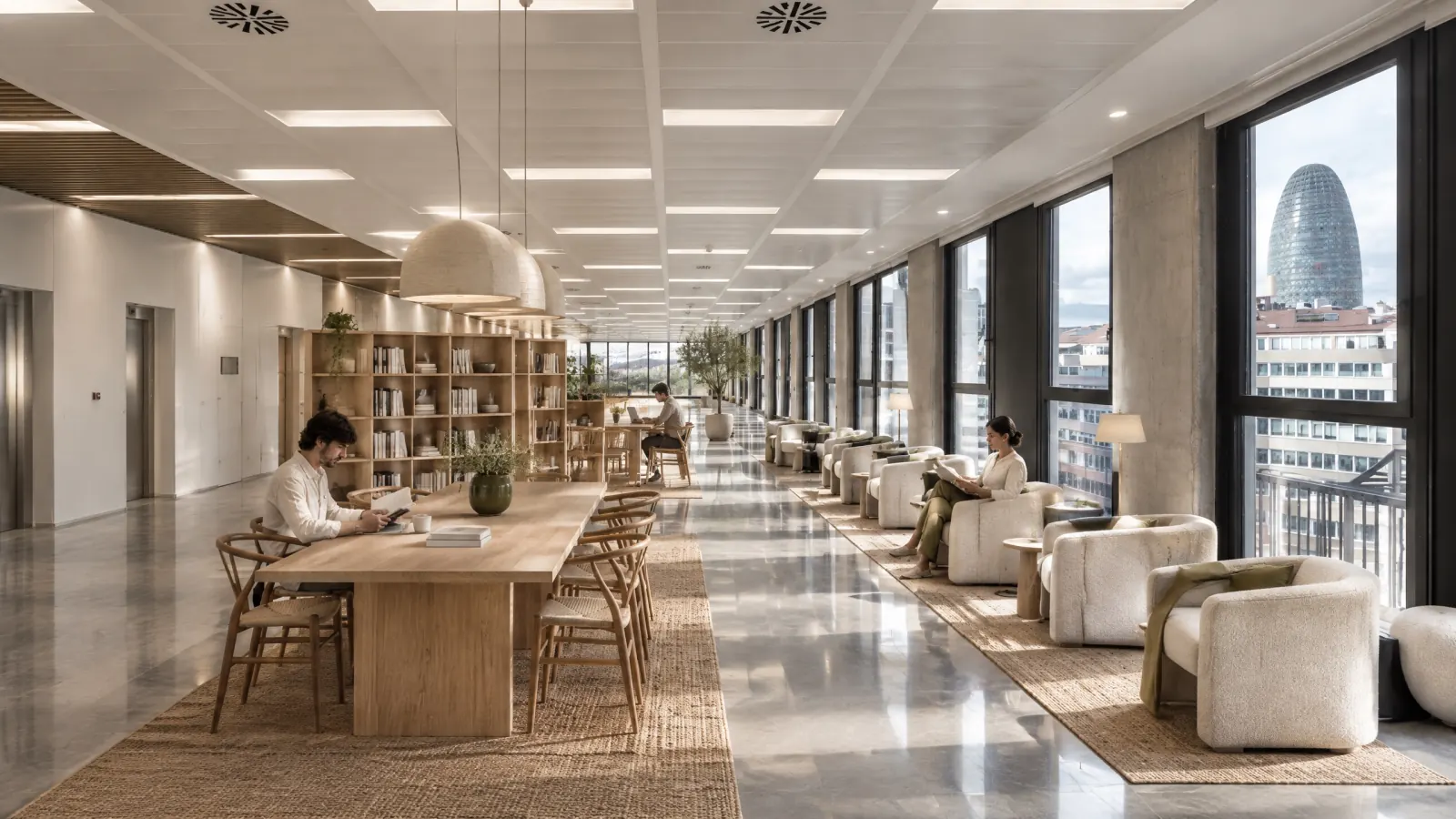
That last point is one of the reasons Poblenou Club is being developed here. The neighbourhood already has the ingredients of a good life: the sea, open space, a creative economy and a strong local identity. What many residents still look for is one place that brings together focused work, training and recovery, good food and the chance to meet people.
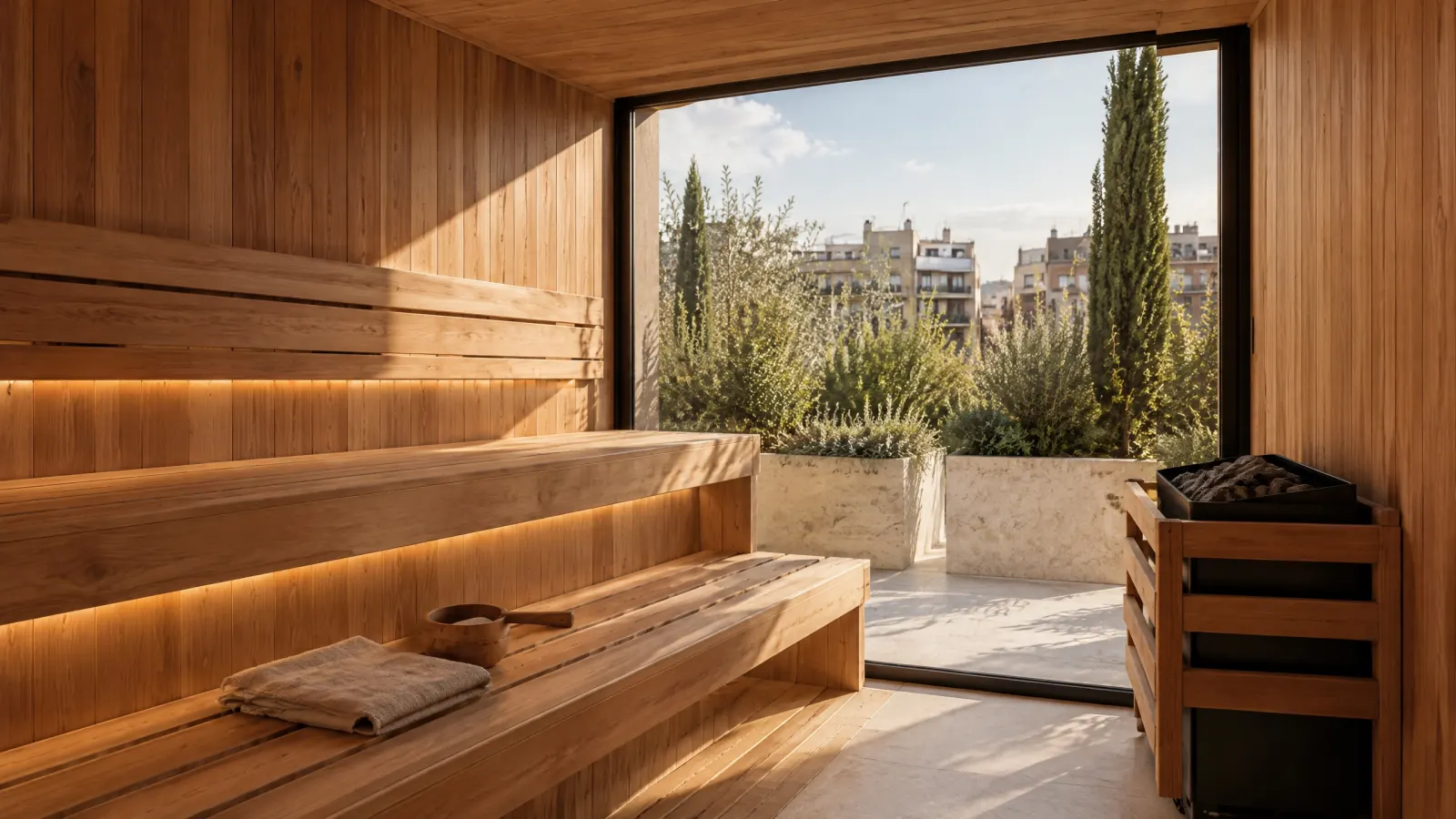
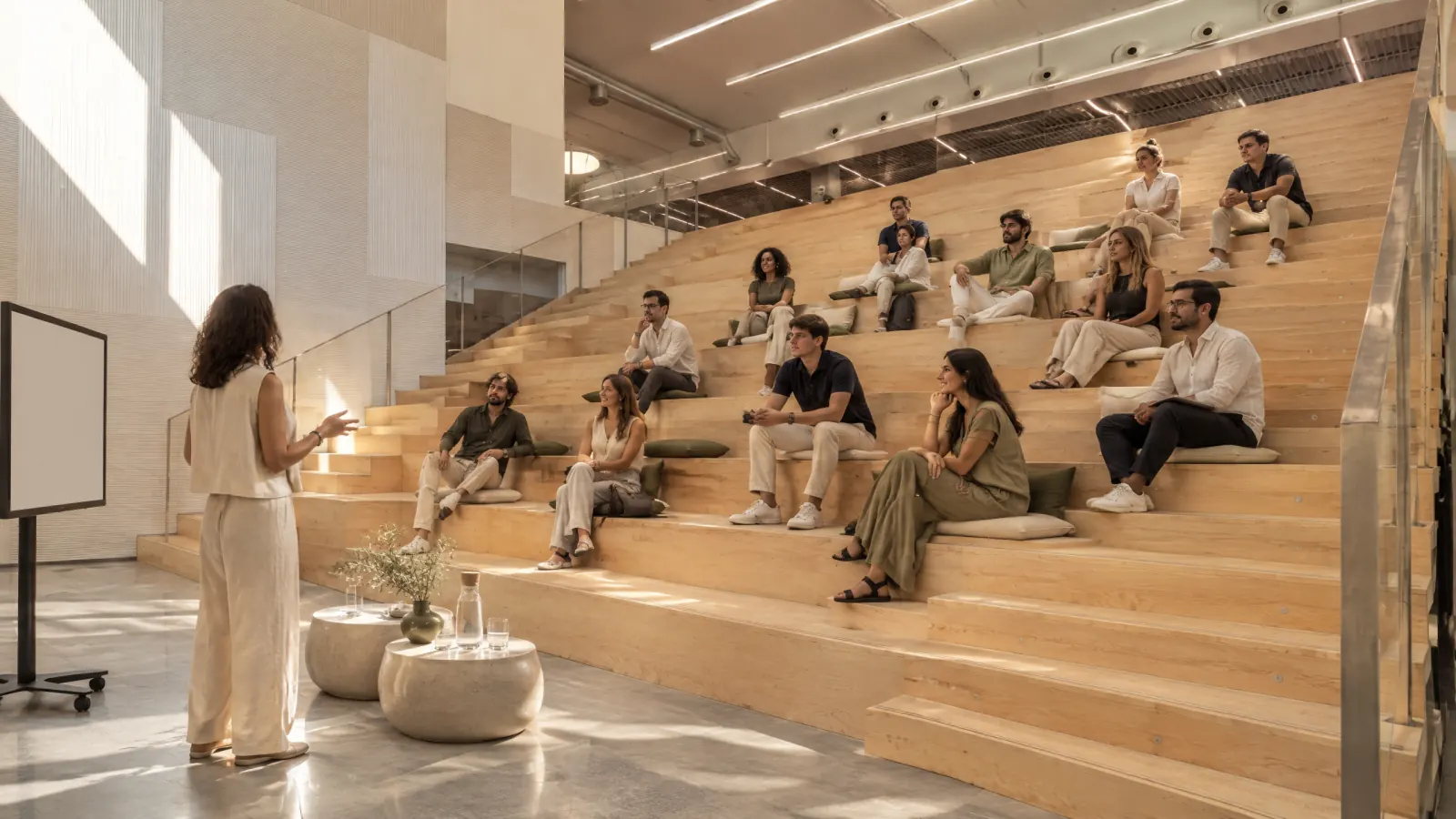
The planned club will combine a work club, a gym, sauna and cold plunge, bookable treatments, food and drinks, and a community programme, designed to fit the rhythm of the neighbourhood rather than compete with it.
Questions
Is Poblenou a good place to live in Barcelona?
For many people, yes. It offers beaches, parks and a calm local atmosphere, with good transport links to the rest of the city and a growing number of workplaces nearby.
Which metro stops serve Poblenou?
Line L4 runs through the neighbourhood, with stops including Llacuna, Poblenou, Selva de Mar and Bogatell. Glòries, on line L1, serves the north-western edge of the area.
What is 22@ in Barcelona?
22@ is the urban plan approved in 2000 to transform Poblenou’s former industrial land into a district for technology, innovation, education and creative work.
What are the best beaches near Poblenou?
Bogatell and Mar Bella are the most popular, while Nova Mar Bella and Llevant, a little further east, are usually quieter.