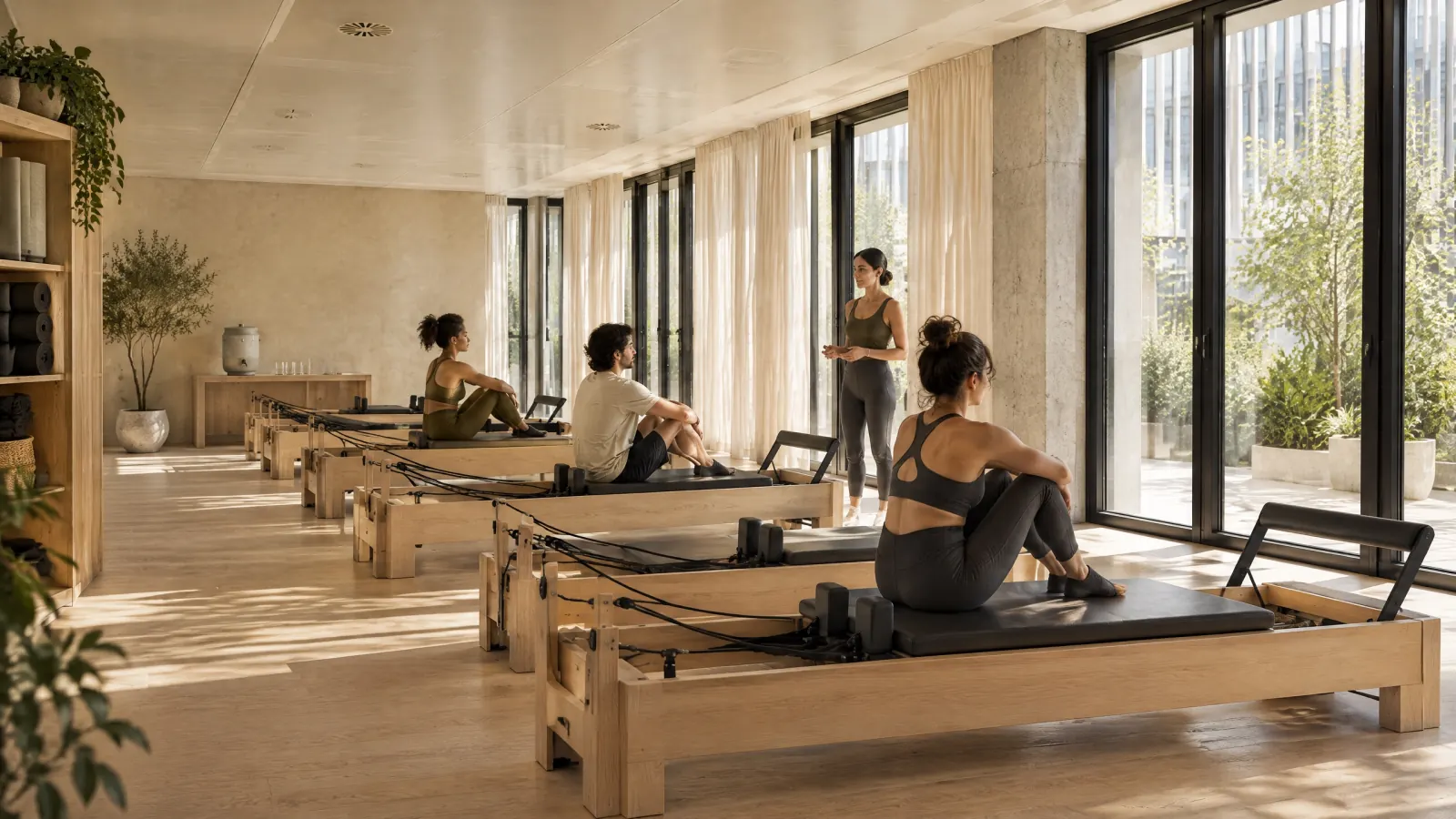
Most of us carry the week in our bodies. Hours at a laptop, a run along the seafront, a padel match, or the shopping carried up the stairs of an older building without a lift. Massage, physiotherapy, personal training, reformer pilates and facials can all help, but they do different jobs. This guide explains what each one is for, how to choose between them and how to fit them around training and desk work, whether you have lived in Barcelona all your life or arrived more recently.
What each treatment is for
- Massage: hands-on work on muscles and soft tissue. Many people find it eases tension and stiffness after training or a long day sitting down.
- Physiotherapy: assessment and treatment by a registered health professional, who looks at how you move, works out what may be behind a problem and usually combines hands-on techniques with exercises to do at home.
- Personal training: a coach who plans your sessions, refines your technique and increases the load gradually. Useful when starting out, returning after a break or working towards a specific goal.
- Reformer pilates: pilates on a machine with a sliding carriage, springs and straps. The resistance is adjustable, so it adapts to each level for building strength, control and mobility.
- Facials: cleansing, exfoliation and hydration for the skin, plus a quiet hour for yourself. Medical skin conditions are a matter for a dermatologist.
How to choose: massage or physio
Sports massage or relaxation massage
The difference is mainly about purpose and pressure. A relaxation massage uses long, flowing strokes at a comfortable pressure; the aim is simply to unwind. A sports massage is more targeted: the therapist focuses on the muscle groups you use most, often with firmer pressure. It can feel intense at times, and some people notice mild soreness for a day or two.
If you train regularly, whether running, padel, cycling or the gym, a sports massage around a hard session or an event may suit you better. If what bothers you is general tension from stress or long working hours, a relaxation massage may be enough. Tell the therapist what you want; a good one will adapt.
When to see a physiotherapist instead
A massage can feel good on a tired back, but it is no substitute for an assessment when something is wrong. As a general rule, it makes more sense to see a doctor or a registered physiotherapist if you have:
- pain after a fall, a sprain or another injury
- pain that lasts more than a few weeks or keeps coming back
- pain that wakes you at night or is steadily getting worse
- tingling, numbness or weakness in an arm or a leg
- swelling, or a joint that locks or feels unstable
Seek medical help promptly for severe pain, or if symptoms come with a fever, unexplained weight loss or changes in bladder or bowel control.
How often people book, and how to combine treatments
There is no single right frequency; it depends on your body, your goals and your budget. Common patterns include a massage once or twice a month to keep tension in check; a sports massage around training blocks or races; physiotherapy sessions closer together at first, then spaced out as you take over with exercises; and personal training or reformer classes one to three times a week, where consistency makes the difference. Facials are often booked every few weeks.
Combining works best when each treatment has a clear role. Strength training and reformer pilates build capacity; massage helps you recover; physiotherapy addresses specific problems. Many people avoid a deep massage just before a demanding session and leave a day after an intense sports massage before training hard. If you are having physiotherapy, tell your trainer so the programme fits your physio’s advice.
Desk work: neck, back and posture
Long hours at a laptop often show up as a stiff neck, tight shoulders and a lower back that starts complaining by mid-afternoon. Many physiotherapists now agree that there is no single perfect posture; what tends to help most is changing position often. A few habits worth trying:
- set the top of the screen roughly at eye level, and use a separate keyboard if you work on a laptop for long stretches
- get up every half hour or so, even just to refill your water or take a call standing
- add some strength work for the upper back, shoulders and hips; reformer pilates and a well-planned gym programme both help
- treat massage as relief, not as the whole solution
If neck or back pain persists despite these changes, that is a good reason to book an appointment with a physiotherapist.
What to ask a practitioner
A short conversation at the start makes a real difference. Useful questions include: what training do you have and, for physiotherapy, are you registered with the professional college? What should this session achieve, and how will we know it is working? How many sessions do you suggest, and what can I do in between? Is there anything I should avoid? A good practitioner will welcome these questions and say honestly when something falls outside their remit.
Care close to where you work and live
The best plan is the one you actually follow. When a massage, a physio appointment or a reformer class sits between your desk and your home, keeping the habit going becomes much easier, and a session fits into a lunch break without crossing half the city. In a neighbourhood like Poblenou, where many people live and work within a few streets of each other, that proximity counts. It is also part of the thinking behind Poblenou Club, which is being developed in 22@ as a place where work, training, recovery and treatments are planned under one roof.
Questions
Is sports massage painful?
It can feel firm, and some people notice mild soreness for a day or two afterwards. It should never be sharp or unbearable, so tell your therapist if the pressure is too much.
Should I see a physio or get a massage for back pain?
For general stiffness, a massage may help you feel better. If the pain follows an injury, lasts for weeks or comes with tingling or weakness, see a doctor or a registered physiotherapist first.
Is reformer pilates suitable for beginners?
Generally yes, because the spring resistance can be adjusted, and most people start with an introductory session to learn the machine. If you have an injury or are pregnant, check with your doctor or physiotherapist first.
How often should I get a massage?
It depends on your goals and budget. Many people book once or twice a month, and a little more often during periods of intense training.